
Introduction
Choosing a charging or data cable may seem simple, but different connector types are designed for different devices, technologies and user requirements. Over the years, the industry has moved from older connector formats such as Micro USB toward newer standards like USB Type-C, while Lightning has remained an important connector within Apple’s ecosystem.
For consumers, the right choice usually depends on device compatibility. For businesses, however, the decision can be more strategic. Distributors, retailers, private label brands and bulk buyers need to understand which cable types are relevant to their target markets, product portfolios, and future demand.
Today, USB Type-C, Lightning, and Micro USB represent three important categories in the cable market. Each has its own applications, advantages, limitations, and market position.
This guide compares these cable types in detail to help consumers and businesses understand which option may be most suitable for their requirements.
Understanding the Three Main Cable Types
Before comparing performance, it is important to understand what makes each connector different.
What Is USB Type-C?
USB Type-C is a modern, compact, and reversible connector used across a growing range of electronic devices.
Unlike older USB connectors, it can be inserted in either orientation, making it more convenient for everyday use.
USB Type-C is now used in many:
- Smartphones
- Tablets
- Laptops
- Power banks
- Wireless accessories
- Gaming devices
- Audio products
One of its biggest advantages is versatility. Depending on the cable and supported devices, USB Type-C can support charging, data transfer, and other functions through the same connector format.
As device manufacturers continue moving toward more universal connectivity, USB Type-C has become one of the most important cable categories in the market.
What Is a Lightning Cable?
Lightning is a compact, reversible connector primarily associated with Apple’s ecosystem.
It has been widely used with various Apple devices and accessories, making Lightning cables an important product category for brands serving Apple users.
Lightning cables are known for:
- Compact connector design
- Reversible connection
- Compatibility with supported Apple devices
- Wide availability in the accessories market
For businesses, Lightning products can remain relevant when targeting customers who use compatible Apple devices. However, changing device standards mean brands should carefully evaluate current and future market demand before planning large product inventories.
What Is Micro USB?
Micro USB was once one of the most widely used charging connectors in consumer electronics.
It has been used across a variety of products, including:
- Older Android smartphones
- Bluetooth accessories
- Power banks
- Wireless speakers
- Smart devices
- Other electronic accessories
Unlike USB Type-C and Lightning, Micro USB is not reversible and must be inserted in the correct orientation.
Although its use in modern smartphones has declined significantly, Micro USB products are still relevant because many existing accessories and electronic devices continue to use this connector.
For this reason, businesses serving replacement markets or specific device categories may still find demand for Micro USB cables.
Also Read: Fast Charging Cable Manufacturing: Technologies, Standards & Market Trends
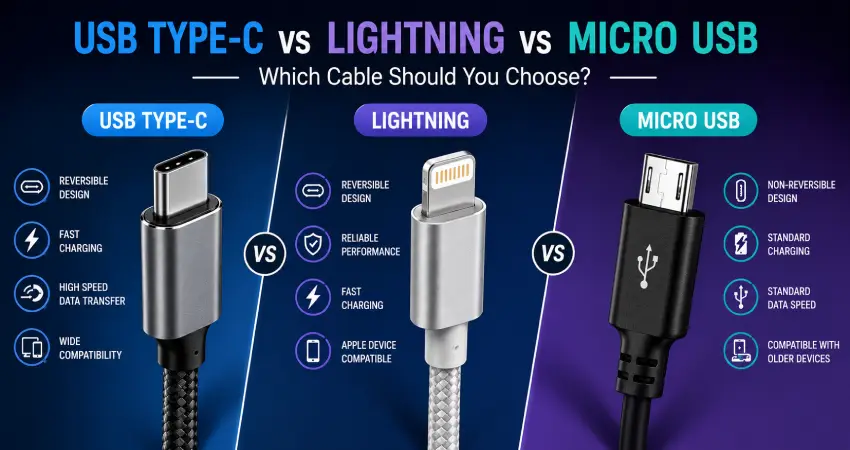
USB Type-C vs Lightning vs Micro USB: Key Differences
The three cable types differ in several important areas.
| Feature | USB Type-C | Lightning | Micro USB |
| Reversible Connector | Yes | Yes | No |
| Modern Device Adoption | High | Apple ecosystem | Declining |
| Fast Charging Support | Yes, depending on specifications | Yes, with compatible products | Limited depending on device |
| Data Transfer | Can support higher-speed standards | Depends on device and cable | Generally lower than modern Type-C standards |
| Universal Compatibility | Growing rapidly | Primarily Apple-compatible devices | Older and legacy devices |
| Future Market Potential | Strong | Depends on Apple ecosystem | Primarily replacement and legacy demand |
The actual performance of any cable depends on its specific design, internal construction, supported standards, charger, and connected device.
Charging Performance: Which Cable Is Better?
Charging speed is one of the most important factors for today’s consumers.
However, it is important to understand that the connector alone does not determine charging performance.
A complete charging system includes:
- The cable
- The charging adapter
- The connected device
- Supported charging protocols
USB Type-C
USB Type-C is widely associated with modern fast-charging technologies. Depending on the cable and device combination, it can support higher-power charging and technologies such as USB Power Delivery.
This makes Type-C suitable for everything from smartphones to tablets and compatible laptops.
Lightning
Lightning cables can also support fast charging when used with compatible devices and charging adapters.
For brands targeting Apple users, fast-charging-compatible Lightning cable options can continue to serve specific customer requirements.
Micro USB
Micro USB was developed during an earlier stage of mobile charging technology.
While some devices using Micro USB may support faster charging technologies, its overall role in the market has shifted toward older devices and accessories.
For new product development, businesses should carefully evaluate whether Micro USB remains relevant to their target audience.
Data Transfer Capabilities
Modern cables are used for much more than charging.
Users may depend on them for:
- File transfers
- Device synchronization
- Photo and video transfers
- Software updates
- Connecting compatible accessories
USB Type-C offers significant flexibility because its performance can vary according to the USB standard supported by the cable and connected devices.
Lightning cables are designed around compatible Apple products, while Micro USB continues to support data transfer for many legacy and existing devices.
For users or businesses where high-speed data transfer is important, cable specifications should always be checked instead of relying only on the connector type.
Also Read: What Makes a High-Quality Data Cable? A Complete Buyer’s Guide
Durability and Everyday Usability
Durability depends more on cable construction than connector type alone.
A high-quality cable should include:
- Reliable internal conductors
- Strong connector housing
- Reinforced stress points
- Durable insulation
- Consistent assembly quality
Braided and reinforced cable designs are commonly preferred by customers looking for improved resistance to daily wear.
USB Type-C and Lightning both offer the convenience of reversible connectors, while Micro USB requires correct orientation during insertion.
For businesses, offering different material options such as PVC and braided designs can help address multiple price and customer segments.
Which Cable Has the Best Future Market Potential?
From a broader market perspective, USB Type-C has become increasingly important because of its adoption across multiple categories of consumer electronics.
Its growing use in smartphones, tablets, laptops and accessories makes it a key category for brands planning future-focused product portfolios.
However, this does not mean other cable types should automatically be ignored.
Lightning may remain relevant for:
- Apple-focused accessory markets
- Replacement cable demand
- Compatible existing devices
Micro USB may remain relevant for:
- Legacy devices
- Low-cost electronics
- Bluetooth accessories
- Existing power banks and other products
The right product mix depends on the devices used by a brand’s target customers.
Which Cable Should Consumers Choose?
For consumers, the answer is usually straightforward: choose the cable compatible with your device.
However, additional factors should also be considered:
- Required charging speed
- Data transfer requirements
- Cable length
- Build quality
- Connector durability
- Compatibility with the charger
Buying a cable simply because it looks similar to another one can lead to poor performance or compatibility issues.
Checking the specifications of both the device and cable is always recommended.
Which Cable Types Should Businesses Include in Their Product Portfolio?
For distributors, retailers, and private label brands, product selection should be based on market demand rather than a one-size-fits-all approach.
A balanced cable portfolio may include different products for different customer segments.
USB Type-C Products
Suitable for brands targeting:
- Modern smartphones
- Tablets
- Laptops
- Fast-charging users
- Future-focused markets
Lightning Products
Suitable for businesses serving:
- Apple device users
- Existing compatible device markets
- Premium accessory segments
Micro USB Products
Suitable for:
- Legacy devices
- Entry-level electronics
- Replacement markets
- Selected electronic accessories
The strongest approach is often to study customer demand, device trends, and sales data before finalizing bulk manufacturing requirements.
Vizin Cables: Supporting Diverse Cable Requirements
For businesses, choosing the right cable category is only one part of the process. Product quality, customization, packaging and consistent supply also play an important role.
Vizin Cables supports businesses looking for charging and data cable solutions across different market requirements. From modern cable formats to customized product specifications, the focus is on helping brands, distributors, and bulk buyers develop cable portfolios suited to their target customers.
Businesses exploring private labeling, customized products, or bulk requirements can evaluate cable options based on connector type, cable material, length, branding, packaging and intended market segment.
This flexibility can help businesses build a more relevant and well-structured product range instead of relying on a limited selection of generic products.
How to Choose the Right Cable for Your Business
Before finalizing a product, businesses should consider the following questions:
Who Is Your Target Customer?
Understanding the devices and preferences of your customers is the starting point.
A brand targeting premium smartphone users may require a different product mix from one selling affordable electronic accessories.
What Level of Charging Performance Is Required?
Fast charging requirements can influence cable design and specifications.
Do You Need Custom Branding?
Private label brands may require customized:
- Logos
- Cable colours
- Packaging
- Product specifications
What Quantity Do You Need?
Bulk requirements can affect production planning, customization possibilities, and overall cost structure.
Are You Planning for Future Demand?
A product portfolio should consider both current sales and changing technology trends.
Conclusion
USB Type-C, Lightning, and Micro USB each serve different purposes within the global cable market.
USB Type-C has become a major connector for modern electronics and offers strong potential across multiple device categories. Lightning continues to serve compatible Apple-focused markets, while Micro USB remains relevant for existing and legacy electronic devices.
There is no single cable type that is automatically right for every consumer or business.
The best choice depends on device compatibility, charging requirements, data transfer needs, target customers and long-term product strategy.
For businesses building or expanding a cable portfolio, understanding these differences can help improve product planning and inventory decisions. Companies working with manufacturing partners such as Vizin Cables can further explore cable options, customization, private labeling and bulk production requirements based on their specific market needs.
Also Read: Type-C Cable Manufacturing: Why Demand is Growing Rapidly
Frequently Asked Questions
1. Which is better: USB Type-C, Lightning, or Micro USB?
There is no single answer for every user. USB Type-C is widely used across modern devices, Lightning is designed for compatible Apple products, and Micro USB is still used in some older and existing electronic accessories.
2. Is USB Type-C faster than Micro USB?
USB Type-C can support newer charging and data transfer standards, but actual performance depends on the cable specifications, device, and charging system.
3. Are all USB Type-C cables the same?
No. Different USB Type-C cables can support different charging capacities, data transfer speeds, and functions. Businesses and consumers should check product specifications carefully.
4. Is Micro USB still relevant?
Yes. Although its use in new smartphones has declined, Micro USB remains relevant for many older devices, accessories, replacement products, and selected electronic categories.
5. Which cable type has the strongest future potential?
USB Type-C currently has strong adoption across smartphones, tablets, laptops, and accessories, making it an important category for future-focused product portfolios.
6. Can businesses customize different cable types with Vizin Cables?
Vizin Cables can support businesses exploring customized cable solutions based on product requirements, including branding, packaging, specifications, and bulk manufacturing needs.
7. Should distributors stock all three cable types?
This depends on the target market. A balanced portfolio can be useful, but inventory decisions should be based on customer demand, device compatibility, and sales trends.
8. Does Vizin Cables support bulk and private label cable requirements?
Yes. Vizin Cables supports businesses exploring bulk manufacturing, private labeling, and customized cable requirements based on their specific product and branding needs.