
Introduction
In the competitive mobile accessories market, a cable is more than just a functional product. For a private label brand, the way that product is presented can have a significant impact on how customers perceive its quality, reliability and value.
Packaging is often the first physical interaction a customer has with a product. Before they test the charging speed, examine the connector, or use the cable, they see the box, pouch, sleeve, or other packaging. A professional and well-designed package can communicate product information, establish brand identity and create a stronger first impression.
This is particularly important for businesses involved in private label cable manufacturing, where the same category of product may be available from multiple brands. Effective packaging gives businesses an opportunity to differentiate their products while creating a consistent identity across their product range.
For distributors, retailers, e-commerce brands, startups and established electronics companies, custom cable packaging can also support better inventory organization, retail presentation, and brand recognition.
This guide explains what custom cable packaging is, why it matters, the different packaging options available and what businesses should consider when developing packaging for their private label cable products.
Also Read: Data Cable Manufacturer in India: A Complete Guide to Private Label, OEM & ODM Cable Solutions
What Is Custom Cable Packaging?
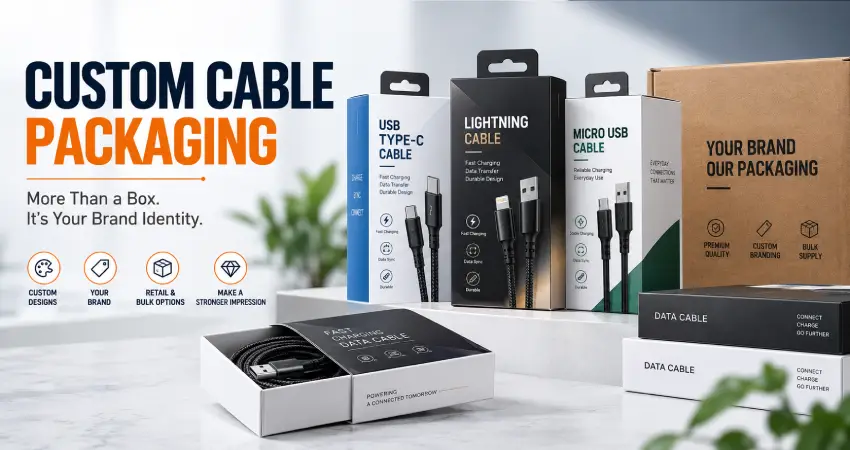
Custom cable packaging refers to packaging designed specifically for a particular brand, product, and target market.
Instead of using generic packaging, businesses can customize elements such as:
- Brand name and logo
- Product information
- Colors
- Graphics
- Product images
- Specifications
- Barcode and SKU information
- Usage instructions
- Compliance information
- Marketing messages
The packaging can be developed around the brand’s visual identity and the type of cable being sold.
For example, a brand selling premium braided USB Type-C cables may choose a premium box with detailed specifications, while a high-volume distributor may prefer simple and cost-efficient packaging suitable for bulk retail distribution.
Why Packaging Matters for Private Label Cable Brands
Private label manufacturing allows businesses to sell products under their own brand name. Because the product is associated directly with the brand, packaging becomes an important part of the overall product experience.
1. Creates the First Impression
Customers often make an initial judgment based on packaging.
A clean, professional package can make a product appear more reliable and organized. On the other hand, poorly designed or unclear packaging can make even a good product appear less credible.
For a growing private label brand, packaging provides an opportunity to establish professionalism before the customer even opens the package.
2. Strengthens Brand Recognition
Consistent packaging helps customers recognize a brand across different products.
A business selling:
- USB Type-C cables
- Fast charging cables
- Lightning-compatible products
- Power banks
- Chargers
- Other mobile accessories
can use a consistent packaging style across its product range.
Over time, customers begin to associate specific colors, typography, logos, and design elements with the brand.
3. Helps Products Stand Out on Retail Shelves
Retail environments can contain dozens of similar cable products.
Packaging can help a product attract attention through:
- Clear product naming
- Strong visual hierarchy
- Professional graphics
- Easy-to-read specifications
- Distinctive brand identity
The goal is not simply to make packaging visually attractive. It should also make it easy for customers to understand what they are purchasing.
Also Read: Private Label Cable Manufacturing: How Brands Launch Their Own Cable Products
Common Types of Cable Packaging
Different businesses have different packaging requirements. The right format depends on the target market, product positioning, distribution channel and budget.
Retail Boxes
Retail boxes are commonly used for branded cable products.
They can provide enough space for:
- Product images
- Technical specifications
- Brand information
- Feature highlights
- Usage instructions
Boxes are particularly useful for premium and mid-range products where presentation is an important part of the buying experience.
Hanging Boxes or Blister-Style Packaging
Packaging designed for retail display can include hanging features that allow products to be displayed on hooks or racks.
This format can be useful for physical retail stores where products need to be visible and easy to organize.
Pouches and Sleeves
Pouches and sleeves can provide a simpler packaging solution while still allowing brand customization.
They may be suitable for:
- Cost-sensitive products
- Promotional products
- Bulk distribution
- E-commerce orders
The appropriate option depends on the brand’s positioning and packaging requirements.
Bulk Packaging
Distributors and wholesalers may have different requirements from retail brands.
Instead of individually packaged products, bulk buyers may require larger cartons or organized inner packaging designed to simplify storage and transportation.
Bulk packaging can help reduce unnecessary packaging costs while improving handling efficiency.
What Can Be Customized?
One of the biggest advantages of private label packaging is flexibility.
Businesses can customize several aspects of the package.
Brand Identity
This can include:
- Logo
- Brand name
- Typography
- Brand colors
- Tagline
- Visual elements
Consistent use of these elements helps create a recognizable brand identity.
Product Information
Customers need clear information before purchasing a cable.
Packaging may communicate:
- Cable type
- Connector type
- Cable length
- Charging capability
- Data transfer capability
- Compatibility
- Material
- Included accessories
Accurate product information helps customers select the right product and reduces confusion.
Feature Highlights
Important product features can be presented clearly on the packaging.
Depending on the actual product specifications, these may include:
- Fast charging
- Data transfer
- Braided construction
- Reinforced connectors
- Flexible design
- High-power support
Claims should always accurately reflect the specifications of the actual product.
Packaging Design for E-Commerce Brands
Packaging is especially important for e-commerce businesses because customers cannot physically examine the product before purchasing.
Online shoppers typically rely on:
- Product images
- Product descriptions
- Reviews
- Specifications
- Brand presentation
A professionally designed package can strengthen the overall visual identity shown across product listings, social media, and marketing campaigns.
For e-commerce brands, packaging should also consider shipping requirements. Excessively large or fragile packaging can increase storage and transportation challenges.
A practical packaging design should balance:
Presentation + Protection + Cost Efficiency
Packaging Materials Matter
The material selected for packaging should match the product and intended market.
Common considerations include:
- Strength
- Protection
- Appearance
- Print quality
- Storage requirements
- Transportation
- Sustainability
- Cost
Premium products may require a more sophisticated presentation, while high-volume products may prioritize efficient and economical packaging.
The best solution is not necessarily the most expensive one. It should be appropriate for the product’s market position.
Packaging and Product Protection
Packaging has a functional purpose in addition to branding.
A cable can experience handling during:
- Manufacturing
- Warehousing
- Transportation
- Retail display
- Delivery to customers
Appropriate packaging can help protect the cable and its connectors from unnecessary damage during handling.
For e-commerce businesses, packaging may also need to withstand shipping conditions.
Therefore, packaging should be designed around both customer presentation and product protection.
Custom Packaging for Different Cable Categories
Different cable products may require different packaging strategies.
USB Type-C Cables
Packaging can highlight relevant specifications such as:
- Connector configuration
- Charging capability
- Data transfer capability
- Cable length
Fast Charging Cables
For fast charging products, packaging should clearly communicate the supported charging specifications without making unsupported claims.
Clear communication helps customers understand what the product can and cannot do.
Braided Cables
Braided cables often have a more premium appearance and can be presented using packaging that emphasizes:
- Durability
- Construction
- Design
- Everyday usability
Customized OEM Products
OEM products may require packaging designed specifically around a brand’s product specifications and visual identity.
This provides businesses with greater control over how their products appear in the market.
Packaging and Private Label Branding
For private label brands, packaging can transform a generic category product into a recognizable branded product.
The same type of cable may be available from multiple suppliers, but a strong private label presentation can create a distinct market identity.
A complete private label package may include:
- Branded cable
- Customized connector housing
- Printed packaging
- Product labeling
- User information
- Retail-ready presentation
This creates consistency between the physical product and the brand customers see online or in stores.
Cost Considerations for Custom Cable Packaging
Packaging customization naturally introduces additional costs.
Businesses should consider:
- Packaging material
- Printing method
- Number of colors
- Design complexity
- Packaging size
- Order quantity
- Special finishes
- Inserts and accessories
Higher production volumes can make certain packaging options more commercially practical.
For this reason, businesses should discuss packaging requirements early in the product development process rather than treating packaging as an afterthought.
Also Read: OEM vs ODM Cable Manufacturing: Which is Right for Your Brand?
How to Choose the Right Packaging for Your Brand
Before finalizing packaging, ask a few important questions.
Who Is Your Target Customer?
A premium consumer brand may need a different presentation from a wholesale-focused business.
Where Will the Product Be Sold?
Retail stores, e-commerce platforms, distributors, and corporate buyers can have different packaging requirements.
What Is Your Price Position?
Packaging should support the product’s market positioning without unnecessarily increasing costs.
How Will the Product Be Transported?
Consider storage, shipping, handling, and protection requirements.
Do You Need Multiple Packaging Sizes?
Different cable lengths or product variants may require different packaging dimensions.
Common Cable Packaging Mistakes
Overloading the Package With Information
Too much text can make packaging difficult to understand.
Important information should be prioritized using a clear hierarchy.
Using Unsupported Product Claims
Packaging should accurately represent the product’s actual specifications.
Overstated charging speeds or compatibility claims can create customer dissatisfaction and damage brand credibility.
Ignoring the Brand Identity
Using inconsistent colors, fonts, and layouts across products can make a product range look disconnected.
Choosing Packaging Only Based on Appearance
Good packaging must also protect the product and work efficiently within the supply chain.
Forgetting the Target Market
Packaging designed for a premium retail market may not be appropriate for a cost-focused bulk distribution model.
Also Read: How to Choose the Right Data Cable Manufacturer for Your Brand
Vizin Cables: Supporting Private Label Cable Packaging
For businesses developing their own cable brands, manufacturing and packaging need to work together.
Vizin Cables supports businesses exploring cable manufacturing solutions for OEM, ODM, bulk and private label requirements. Packaging can be considered as part of the overall product development process so that the final product is aligned with the brand’s intended market positioning.
From product specifications and branding requirements to packaging presentation, businesses can plan their cable products according to their target customers and distribution strategy.
This approach allows brands to develop a more consistent product identity rather than treating the cable and its packaging as completely separate elements.
Why Packaging Should Be Planned Early
One common mistake businesses make is finalizing the product first and thinking about packaging later.
Packaging can influence:
- Product dimensions
- Label requirements
- Retail presentation
- Shipping efficiency
- Product protection
- Overall production cost
Planning packaging during the product development stage allows businesses to make better decisions and avoid unnecessary changes later.
For private label brands launching multiple cable products, establishing a packaging system early can also make future product launches more consistent.
The Future of Cable Packaging
As competition in the mobile accessories market continues to increase, packaging is likely to become an even more important part of product differentiation.
Brands are increasingly looking for packaging that combines:
- Strong visual identity
- Practical protection
- Clear product information
- Efficient logistics
- Responsible material choices
The objective is moving beyond simply putting a product inside a box. Modern packaging needs to contribute to the complete customer experience while supporting efficient business operations.
Also Read: Bulk Cable Manufacturing: Benefits for Distributors, Retailers & Brands
Conclusion
Custom cable packaging plays an important role in the success of private label brands.
It creates the first impression, strengthens brand recognition, communicates product information, protects the product and helps businesses differentiate themselves in a crowded market.
For distributors and retailers, packaging can improve shelf presentation. For e-commerce brands, it can strengthen the overall visual identity of the product or For private label businesses, it provides an opportunity to build a consistent brand experience across an entire product range.
However, effective packaging is not simply about creating an attractive design. Businesses should consider product specifications, target customers, distribution channels, protection requirements, manufacturing costs, and long-term brand strategy.
By combining reliable cable manufacturing with thoughtful packaging and branding, businesses can create products that are better positioned for today’s competitive accessories market.
For companies looking for OEM, ODM, bulk and private label cable manufacturing solutions, working with an experienced manufacturing partner such as Vizin Cables can help bring product, branding, and packaging requirements together into a more consistent product development process.
Frequently Asked Questions (FAQs)
1. What is custom cable packaging?
Custom cable packaging is packaging designed specifically for a brand and its cable products. It can include customized branding, colors, product information, graphics, specifications, and packaging formats.
2. Why is packaging important for private label cable brands?
Packaging helps establish brand identity, create a professional first impression, communicate product specifications, protect the product, and differentiate it from competing products.
3. What types of packaging can be used for cables?
Common options include retail boxes, hanging boxes, sleeves, pouches, and bulk packaging. The best choice depends on the product, target market, sales channel, and budget.
4. Can cable packaging be customized with a company logo?
Yes. Private label packaging can generally be designed around a brand’s logo, colors, product information, and visual identity.
5. What should be printed on cable packaging?
Depending on the product and market, packaging may include the product name, connector type, cable length, charging specifications, data capabilities, compatibility information, brand details, and other required product information.
6. Does Vizin Cables support private label cable requirements?
Vizin Cables supports businesses exploring private label, OEM, ODM, and bulk cable manufacturing requirements, including product branding and packaging considerations.
7. How should businesses choose cable packaging?
Businesses should consider their target customers, product positioning, sales channel, packaging cost, product protection, storage requirements, and transportation needs before selecting a packaging format.
8. Is custom packaging suitable for bulk cable orders?
Yes. Custom packaging can be particularly useful for bulk buyers and private label brands that want products to be delivered with consistent branding and retail-ready presentation.